
video Francesca Llopis, sound Barbara Held
video Francesca Llopis, sound Barbara Held

Prototypes for the mobilization and broadcast of fugitive sound
The recording can be a reflection of the thoughts and emotions of a human being (Arthur Russell), memory (see Brandon LaBelle’s project, Phantom Music – Radio, Memory, and Narratives from Auditory Life), or museum (Edgard Varèse used recordings of the Holy Week procession of the Catalan village of Verges, presented every year since the middle ages, in his soundtrack for a film on Miró). A studio production records one perfect performance, its presence in time and space similar to that of a film. Destructive noise can be transposed into delicate vibrations of a transparent membrane (Juan Matos Capote).
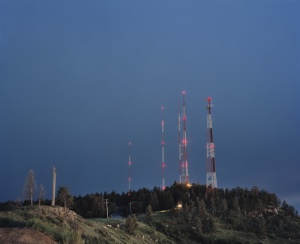
Radio Action III. Photo by David La Spina
New program Lines of Sight at RWM, in collaboration with New York-based transmission art organization free103point9 and Galen Joseph-Hunter.
Radio Action III features five-minute sound works conceptually tied to the idea of “radio” as an instrument or theme, composed by free103point9 transmission artists working in collaborative teams. 31 Down & Matt Bua comment on the consumer market’s hunger for all that is wireless. Damian Catera explores FM spectrum broadcast content as a symbol of social decline. Alexis Bhagat & Sophea Lerner utilize the transmission spectrum as a networked space for communication. Melissa Dubbin and Aaron S. Davidson as well as neuroTransmitter stage reenactments and or use archival recordings in homage to historical radio experiments and actions. The Dust Dive & Latitude/Longitude infuse their musical practice with “celestial forces.” Joshua Fried & Todd Merrell, Tom Roe & Scanner, as well as LoVid & Michelle Rosenberg with Howard Huang employ the electromagnetic spectrum (signal and interference) as their sonic palette. Anna Friz & Tianna Kennedy consider conceptual and poetic radio space. Michelle Nagai with Kenta Nagai as well as radio_ruido & ben owen explore transmission and reception as a means to map an interior space.

«I sometimes think of music as a succession of sounds which on reaching the listener’s ear turns back on itself and retraces its path, in orderly disorder, until re-entering the mind of the person who thought it up», wrote the Italian artist and composer Walter Marchetti.
Together with Robert Ashley, Eugènia Balcells, Joan Brossa, John Cage, Morton Feldman, Pauline Oliveros, Lee Ranaldo and Yasunao Tone, Marchetti was one of the authors whose work was included in the exhibition Possibility of Action. The Life of the Score, curated by Barbara Held and Pilar Subirà at the MACBA Study Center.
The exhibition explored the possibilities of musical notation, loosely understood as a means for musical and visual transmission, and brought together historical and contemporary scores as well as artistic creations not strictly from the field of music. Scores became a field of action, sound became artistic material, the boundaries between art, music and life blurred, and the powers of composers, performers and audiences merged.
The exhibition was presented in conjunction with the RWM program Lines of Sight, a new space for sound experimentation.
“One of the more recent contemporary art exhibitions to provide a historical survey of graphic and experimental scores as visual as well as notational objects was Possibility of Action: The Life of the Score at the Museu d’Art Contemporani de Barcelona Study Center in 2008.” Cited by Hendrik Folkerts in his text for Documenta 14, Keeping Score: Notation, Embodiment, and Liveness
http://www.documenta14.de/…/464_keeping_score_notation…

Clear Music, Eugenia Balcells
Canten les pedres
Un projecte musical sobre les teories simbòliques de Marius Schneider
Paral·lelament al Festival de Músiques Religioses del Món, la ciutat de Girona va programar per a l’estiu 2001 el projecte “Canten les pedres”, que es desglossa en dues activitats, un concert a l’Auditori de la Mercè el dia 3 de juliol i una instal·lació sonora a les Sales Municipals d’Exposició des del 30 de juny al 31 d’agost.
Aquest és un projecte musical de Barbara Held -la qual hi intervé com a compositora i flautista- qui ha convidat als músics Matthew Davis (trompeta), Àngel Pereira (percussió), Anne Wellmer (veu) a participar d’aquest projecte, així com a l’artista Pere Noguera per a l’elaboració de l’espai de so i la part plàstica del concert. Adolf Alcañiz s’ha fet càrrec de la realització d’imatges.
El projecte “Canten les pedres” aborda des de la música contemporània la dimensió sagrada del so, inspirant-se en les teories simbòliques del professor i musicòleg Marius Schneider (1903-1982), les quals relacionen el repertori iconogràfic animal dels capitells romànics del claustre de la catedral de Girona amb tot un sistema de correspondències místiques entre els animals, el so, els astres, els instruments musicals o els quatre elements, d’acord amb una teoria de la Índia del segle XIII que identifica certs animals amb determinats sons musicals. El resultat d’aquesta investigació es revela en unes partitures que constitueixen una mena de mandales musicals, referència per als quatre compositors que les interpretaran lliurement d’acord amb els codis de la música contemporània.
Marius Schneider, musicòleg i estudiós de la mitologia i la cosmologia antigues, va ser molt amic del crític i poeta Juan-Eduardo Cirlot, a qui va influir sens dubte en la confecció del seu famós Diccionario de símbolos. Schneider, que va venir a Barcelona l’any 1943 convidat per Higini Anglès a treballar en un projecte en col·laboració amb el Consejo Superior de Investigaciones Científicas sobre la creació d’un institut musical de folklore, va sentir-se atret pel romànic català i especialment pels claustres de la catedral de Girona i del monestir de Sant Cugat, autèntiques partitures musicals en el ritme , repetició i representació de la iconografia dels seus capitells. L’any 1944 fundà i dirigí fins l’any 1951 el Departament d’Etnologia del Instituto Español de Musicología de Barcelona. Finalment, arribà a formular les seves teories al llibre El origen musical de los animales-símbolos en la mitología y la escultura antiguas, escrit i publicat en castellà a Barcelona l’any 1946, reeditat per EdicionesSiruela (1998), en el qual dedica precisament el capítol titulat “Canten les pedres” a la interpretació musical de la iconografia d’aquests claustres.
Schneider defensa en aquest llibre que en el principi del món era el so, el ritme, que la substància sonora era la matèria prima del món i se serveix de la cosmografia musical megalítica conservada en l’Europa medieval o en els textos vèdics de l’Índia per desxifrar les claus musicals inscrites en els capitells dels claustres del Monestir de Sant Cugat i de la Catedral de Girona, tallats pel mateix mestre escultor.
Es parteix del claustre com a espai que simbolitza una mena de Jerusalem celest, un centre còsmic en relació amb els tres nivells de l’univers: el subterrani dels pous, la superfície de la terra en el sòl i el món celest. El claustre com a cruïlla de quatre avingudes en l’espai d’acord amb l’orientació de la llum del sol: nord, sud, est i oest. Es tracta d’un ordre triàdic (el claustre com a mandala triàdic, de 3 + 1), que coincideix amb la distribució del claustre en quatre parts: quatre músics, quatre instruments, quatre llocs, quatre temps, quatre llums, quatre estacions de l’any.
El projecte musical de Barbara Held s’articula entorn de quatre instruments – trompeta, percussió, veu i flauta- i quatre composicions, elaborades expressament, en les quals els músics creen a partir de les teories simbòliques de Marius Schneider des d’una visió contemporània del so que retorna a la mística primitiva, quan el pla acústic era el més alt i elevat de tota la creació, quan el ritme era l’origen del món. Aquests quatre instruments es relacionen i tenen una equivalència amb les hores del dia, la llum i els animals representats en el claustre de Girona, de manera que el lleó marca el matí, el despertar i el so de la trompeta; L’àliga és l’au de migdia, de la velocitat i dels trons i acull la percussió; el gall dindi, molt representat en el claustre de Girona, és l’au del capvespre i és la veu qui el representa, mentre que el peix, la serpent o el cocodril són els animals que expressen la nit, l’esperit de l’ aigua i la fecunditat, essent la flauta l’instrument que la representa. Cada músic ha elaorat una composició de quinze minuts, de manera que el concert té una durada d’una hora i la visita a la instal·lació sonora també.
Matthew Davis i Barbara Held s’han servit d’imatges per desenvolupar el seu treball musical. Matt ha emprat el pas de la llum a temps real sobre un dels capitells del claustre de Girona per crear la seva composició que es transmet al mateix temps que la seva música. Tant la seva composició com la trompeta al·ludeixen a la llum del matí. Barbara Held empra imatges en moviment de l’aigua i de la nit per marcar el ritme de la seva partitura en una sincronització via ordinador. El ritme de l’aigua marca el ritme de la composició i la interpretació; alhora, la imatge és una ombra del moviment del so. Hi ha, per tant, una interacció entre la respiració que produeix el so de la flauta i el moviment de l’aigua. Àngel Pereira, percussionista molt reconegut de l’Orquestra de Cambra del Lliure, entre moltes altres, se serveix d’instruments objectuals i pedres per crear aquest retorn als orígens del so i l’alemanya Anne Wellmer, coneguda pels seus treballs d’ instal·lació sonora, performance i treballs amb la veu va les fonts directes del cant medieval i a les partitures generades per la disposició dels capitells dels claustres de Girona i Sant Cugat per donar-ne la seva versió, tot vinculant aquest so originari de la música que neix imitant el dels animals, al so dels insectes i les abelles.
La participació plàstica de Pere Noguera, artista conegut per les seves instal·lacions i accions, constitueix la base de l’espai de so de les Sales Municipals, on ha utilitzat com a mòdul repetitiu per a un espai sonor i alhora escultòric i simbòlic, una columna de testos fumats de Quart en posició de boca-boca fins constituir una mena de columna sens fi. La ceràmica actua com a símbol dels quatre elements i la forma acampanada i sonora del test -gairebé un instrument de percussió- es distribueix alhora sobre el terra en diversos seients. Test que referma al mateix temps la seva forma de trapezi, com la del mateix claustre de Girona, la qual en la seva doble posició, dreta i invertida, Schneider relaciona amb els elements terra i aire. L’altre element simbòlic emprat per Noguera és una rajola, una simple rajola hexagonal, la qual conté, si la dividim per la meitat en dos trapezis i al mateix temps en dos rombes, en totes les formes que simbòlicament constitueixen, segons el musicòleg alemany, els quatre eements: terra, aigua, foc i aire. Amb aquestes rajoles l’escultor construeix una pila fins crear una estructura de rusc d’abella. Altres elements integrats en l’espai de so són les imatges de l’aigua que es projecten amb la música de Barbara Held i les del pas de la llum sobre el capitell en sentir el so de la trompeta de Matt Davis. La llum, també com a element primordial, rep un tractament especial, tota creant una mena de partitura de llum a la sala.
L’espai semicircular de les Sales Municipals constitueix un espai d’informació presidit per la pila simbòlica de rajoles, vitrines amb diversos objectes relatius al món del so, un espai de documentació dedicat a Marius Schneider, a les seves partitures mandàliques, als capitells del claustre de Girona triats i a la informació sobre els compositors i artistes de l’exposició.
El concert conserva el mateix esperit que presideix la instal·lació sonora de les Sales Municipals, si bé els músics hi ofereixen una variació musical, que és el treball conjunt de tocar alhora en el pas de les composicions que marquen el trànsit de la nit al dia.
PILAR PARCERISAS, Comissària i coordinadora del projecte “Canten les pedres”, 2001

Singing Stones
“Singing Stones”, (in German, Singende Steine) is a collaborative project about the cosmic dimension of sound, from the point of view of contemporary musicians and visual artists. It is inspired by the theories about musical symbolism put forward by the German ethnomusicologist, Marius Schneider (1903-1982) in his book, El origen musical de los animales-simbolos en la mitologia y la escultura antiguas [The musical origin of animal symbols in ancient mythology and sculpture] (1946), in which the chapter entitled “Singing Stones” is devoted to a musical interpretation of the late XII century capitals in the cloister of Girona Cathedral and the monastery of Sant Cugat, on the basis of Schneider’s research during the time he was head of the ethnology department at the Instituto Español de Musicologia in Barcelona in the 1940’s.
It is well known that in the High Middle Ages the world was still a harmonious whole between heaven and earth, macrocosm and microcosm were linked, and all appearances were nothing more than symbols of a unique truth. Thus it is not surprising that each animal represented in the capitals of the cloister is a symbol of a physical element, a color, a season of the year, a time of the day, a sound and a musical instrument. Schneider’s study traces the perseverance of a megalithic musical cosmography into the Middle Ages, and the correspondence between musical notes and their animal-symbols which had arrived from India via the Sarngadeva treatise in the XIII Century, giving musicological importance to the animal iconography of the cloisters of Girona and Sant Cugat, authentic musical scores of petrified hymns. In Sant Cugat, the hymn is dedicated to Sant Cucufat, and in Girona, to the Mater Dolorosa. These petrified representations of animals are nothing less than the memory of sound as the basic material of the primordial universe, rhythmic sound as the essence of phenomena, the animal cry-symbol, an imitation of the sound of the animals, being the mystical connection between man and nature.
This sound installation that borrows Schneider’s title “Singing Stones” joins music, objects, images and light using the natural rhythm of the hours of the day in relationship to the primordial rhythms of flowing time, the basic structure of the world. From the multi-disciplinary viewpoint of the contemporary arts, it revindicates sound as the prime material of the universe, the acoustic plane as the primordial fount of music and the word. The first created word is a pure sound world. The first names are rhythms that constitute the essence of the things created, as Schneider reminds us, a vision that coincides with that of Walter Benjamin on the onomatopoeic origin of language.
This work, without touching on the esoteric, takes music as the archetype of cosmic order, transmitter of the primordial time of creation before objective consciousness of space; in Brahmanic philosophy, the pure quintessential space of aether is transmitter of the sound from which the other senses and material elements (air, fire, water and earth) are derived. The mystic symbol OM is the creative sound of the universe, symbolically transmitted by the buzzing of bees. According to Schneider, sound is also the breath (prana), the fundamental principle of life; all that lives must sound: sound=breath=wind=creation of life=language=heat (fire)=the mystical syllable OM.
This installation unites the spirit and energy of its creators who participate in this primordial acoustic rhythm, associating each musical instrument with its time in the cycle of the light of day (trumpet-morning, percussion-midday, voice-evening, flute-night). It is a converging of the luminous nature of sound with the voice as creative force, individual and untransferable, of the breath as flux of the rhythm of visual image, it is a reference to the buzzing of bees as bearers of the original sound, the ritual of sacrifice associated with creation, the presence of the four material elements and the relationship between architecture and music, by means of a sculptorial use of harmonious geometric forms.
“Singing Stones” combines light, sound, image, objects, materials and technology in a contemporary vision of the creation. It is a return to the cosmic dimension in music, an investigation in many idioms that flows into a new rhythmic order of the the world, which, at the same time, is its origin.
PILAR PARCERISAS, Curator of the project “Singing Stones”, 2001

MATT DAVIS, trumpet: “Orientation of a Disappearance”
Play: Orientation of a Disappearance
This is a piece related to the morning played on an instrument which corresponds to the first hours of the day: the trumpet. It is a semi-structured improvisation, recorded live in the site specific space of the cloister of Girona Cathedral.
Davis has attempted to recreate the first symbolic resonance and opens the composition with a long sustained note that aludes to the beginings of the day and the sense of the orientation of the light. After this long sound, like the light itself (which he recorded on video in the cloister whilst playing the piece and used as a score), the sounds occupy a more austere and dry space, on the borders of percussion.
The music tries to relate itself to the initial state: a state inside a mystical order between man and nature which, in this case, corresponds to the in-between, dream-like state of awakening.
The piece utilises as its base one of the themes of the project The Singing Stones, namely a series of symbolic elements which act as a map to initiate changes of energy and direction in the music by organising different areas on investigation and theme.

ANGEL PEREIRA, percussion: “The fire of the drum”
In “The fire of the Drum”, a composition for the solar hour of midday, Pereira brings to bear all his vast and diverse battery of percussion instruments in the service of this igneous creation with its deep, full sounds, redolent of acoustic primitivism, structured around the thunder-roll he produces with such virtuosity on the range of percussion instruments.
The drum is associated here as in the different mystical positions of the Vedic drums with the rituals of offering, sacrifice and purification, with the sacred fire, but also with the rhythms of Nature, such as the fire of the earth, the precipitation of the rain, the reverberations of the thunder and the breaking of the storm, the rippling whisper of wheat fields, the water of the streams, the drum as an hourglass, as an inverted pot and a bell of low, sad sounds.
Pereira paints a sound landscape based on an improvised constellation of sounds that draw on the most essential objects and materials of so-called primitive cultures stone, wood, metal and seems to invoke the power of Agni, swelling into a repeated series of drum beats and reverberating gong strokes that project sonic pillars of smoke. Pereira ends one of his compositions with a bass thunder-roll on a smoked earthenware pot from the town of Quart that is part of the sculptor Pere Noguera’s contribution to the project.

ANNE WELLMER, voice: “Frozen voices”. In collaboration with the Japanese soprano Mikae Natsuyama Cho
A specialist in sonology and in the electronic treatment of the voice and sound for the stage, Anne Wellmer is the composer of the piece Frozen voices. In it she has worked with the voice of the Japanese soprano Mikae Natsuyama Cho, who sings the hymn dedicated to the Virgin of Sorrows, the melody that is encoded in the stone carvings of animal figures in the cloister of the Girona Cathedral. The electronic manipulation of the voice carries us off to another, preterite dimension of the song, which ends by merging into the buzzing of insects and bees, bearers of this original mystic sound. Here once again we are reminded that the syllable Om (=aum) is the fundamental sound of the universe, which Schneider associates with the buzzing of the bees.
The words of this medieval hymn of stone are in Latin, and the notes of the score are the result of the correspondence between sounds and the animals that symbolize them, according to the ancient Hindu system of assigning a rich body of meaning to every note of the musical scale: Cunctis intere o stat generosior Virgo Martyribus: prodigio novo. In tantis moriens, non moreris. Parens, Diris fixa doloribus. Amen.
Wellmer, with great subtlety and taste, makes use of the most sophisticated electronic media to take the voice and the word back to the origins of sound, to the primordial buzzing of bees and insects, the bearers of fire and warmth. The voices still echo through the passages of the cloister as the crackle of the flames gradually invades the space, in subtle memory of the Inquisition.

BARBARA HELD, flute: “Samgîtaratnâkara” [The Ocean of Music]
ADOLF ALCANIZ, video
Barbara Held, flutist, explores the luminous and expansive nature of sound, accompanied by images of water in movement and of nocturnal light approaching the break of day (until the high Middle Ages the dawn was described as a singing light). This is a piece made in collaboration with video artist Adolf Alcañiz, in which video images move to the rhythm of the breath, light and sound uniting heaven and earth and connecting us to the rhythm of creation and the roar of the primordial waters.
In Samgîtaratnâkara, [The Ocean of Music] (named after a 13th century treatise about music that begins with a detailed cosmology, and includes information about the human body such as the stages of pregnancy from month to month, and about religion, philosophy and music) music returns to its primordial place as the archetype of cosmic order. It is a living relationship, a concert piece in which the image is led to the rhythm of the music, changing its form in each performance. The video images_light reflected on water, ocean waves, urban night light_ are open sequences connected by the music, which marks the internal rhythm of the the image and its composition, a flux between image, sound and light. Reflections of light on water act as an hypnotic introduction to an interior voyage, nocturnal, dangerous. Here, water is a mirror that reflects sound, the inaudible original sound that we represent when we play music. Held and Alcañiz were inspired by a passage of M. Schneider’s book in which he speaks of “the clearest manifestation of the rhythm, of the interior law of the individual” that resides in the voice. He interviewed the members of an African tribe and relates their belief that each living being has its own song, and that this melody is the reflection of the immortal part of the human soul, just as the shadow is the reflection of the mortal body. In the words of Quasi, agni tribesman: ” each living soul is made up of two parts, one mortal, and the other immortal. The spirit of a living man is a shadow that changes place and shape according to the position of the body in relation to the light of the sun. This spirit can also be an image that comes from water singing sadly when one is close to a river. ..” “one must be very careful because this spirit attracts your body toward it with its song.”

PERE NOGUERA: “Memory of sound”. Installation
A single space embraces the four pieces of music by means of a symbolic column of smoked earthenware pots from Quart placed mouth to mouth inside a circle of stones which occupies the centre of the space. Earthenware alludes here to the four elements, and a number of bell-shaped pots, with their acoustic potential, are also laid out on the floor to be used as seats. To complement the two visual projections corresponding to the pieces by Matt Davis and the duo Held/Alcañiz, in the space devoted to percussion-fire (Pereira) Noguera has placed two stones, set opposite one another, and a lamp, while in the space devoted to the voice with the sounds of insects and fire (Wellmer) there are seven beehives (borrowed from a local beekeeper), structures that confront the void and the full in terms of the before and after of the creation of the beehive, with its skeleton is in the form of a pentagram. The whole work is generated on the basis of a hexagonal tile, split up to create two triangular and two trapezoidal forms relating to the four elements (earth-water-air-fire) and their associated colours and sounds and give a cosmic vision of the memory of sound with the presence of contemporary earthenware objects. The form of the trapezium is apparent in the tiles, in the pots and in the form of the cloister of Girona Cathedral. Using 800 tiles with this basic form Noguera has laid out on the ground a three-dimensional spiral mystic symbol of the evolution of the universe in a structure which closely resembles a beehive. The objects in the display cases reflect the origins of the musical instruments and their relation to the four elements of nature.
Lines of Sight, a series of radio programs curated by Barbara Held and Pilar Subirá, takes its name from the interconnected points of the global resonant space created by radio and other wireless technologies. From out of the extraordinary array of music that plays on this world-wide stage, we will follow threads as diverse as musical notation and non-linear composition, and introduce artists who explore the ideas around transmission as a medium for creative expression.
Metronom espacio abierto de investigación artístico
Created and curated by Barbara Held in collaboration with guest curators Augusti Fernandez, Francisco López, Paul DeMarinis, Bert Bongers, IBA

MACBA celebrates a timeline of Metronom featuring documentation of concerts and sound art, soon to become part of the video/sound archive project recently initiated by AMEE Asociación de Music Electroacústica y Arte Sonoro de España. Special thanks to Victor Aguado!


Setmana de musica experimental 1985
Phill Niblock
Christian Marclay
Elliot Sharp
Paul Panhuysen
Ellen Fullman
Llorenç Barber
Charles K. Noyes
Oriol Graus
SPACE, Roscoe Mitchell, Tom Buckner, Gerald Oshita


MUSIQUES SUBMERGIDES oferirà durant cinc dies seguits, en el marc de Metronom, una visió panoràmica que donarà imatge de la varietat de possibilitats de la música d’avui i de l’ús de les noves tecnologies aplicades a la música amb la participació de músics catalans i d’arreu del món. Seguint el criteri de KRTU, la mostra de música comptarà amb la col·laboració de diversos artistes que treballaran a partir de la il·luminació del concert en una recerca al voltant de la llum i el so. Com a catàleg-document d’aquest esdeveniment, s’ha editat un CD (compact disc), que recull peces dels músics participants i els textos corresponents.


Dimarts, 2 de febrer de 1993, a les 20 h.
Miquel Jordà (Barcelona) Instal·lació sonora interactiva (saxo i espai electrònic)
Gordon Monahan (Canada)
“Speaker Swinging” (tres altaveus en moviment piano preparat)
Dimecres, 3 de febrer de 1993, a les 20 h.
David Behrman (USA) “Interspecies Smalltalk” (Duo per flauta i ordinador)
“Blue” Gene Tyranny (USA) (pianista col·laborador de Robert Ashley, Laurie Anderson, Peter Gordon, etc.)
amb Barbara Held
Col·laboració: Jorge Ribalta
Dijous, 4 de febrer de 1993, a les 20 h.
STEIM (Centre per a la recerca de la música electroacústica
d’Amsterdam)
Nick Collins (USA) (música trombó-propulsat) “Real electronic music” (fragments d’emissions de ràdio controlats per trombó midi)
Michel Waisvisz (Holanda) “Hands” (control de sons electronics mitjançant el moviment de les mans)
Joel Ryan (USA) (música interactiva per ordinador)
Col·laboració: Marcel Pey
Divendres, 5 de febrer de 1993, a les 20 h.
Fast Forward (R. U.) (percusió amb tambors jamaicans i objectes trobats)
Takehisa Kosugi (Japó) (violí elèctric)
Fátima Miranda (Madrid) (veu)
Col·laboració: Pere Noguera
Dissabte, 6 de febrer de 1993, a les 20 h.
Miquel Gaspà (Barcelona) (Clarinet)
Josep Manuel Berenguer (Barcelona) (compositor)
Pauline Oliveros (U.S.A.) (acordió electrònic)
Col·laboració: Jordi Benito

L’ART D’AFAIÇONAR EL SO. ESTHER XARGAY

“Voyager”
George Lewis
Evan Parker
“Death Praxis”
Tenko & Ikue Mori
“Fugue State (for David Tudor)”
Ron Kuivila
“Passio”
Miquel Jorda

Música a Metrònom, 1997
Co-Curated by Barbara Held and Augusti Fernandez
Duo
Sainkho Namtchylak, voz
Peter Kowald, contrabajo
Tom Cora and “Man with the Movie Camera”
Tom Cora, violoncel
“L’ombra dels pins”
Augusti Fernandez, piano
Carlos “Zingaro”, violin
Robert Ashley, “Perfect Lives”
Robert Ashley, voz
Carme Canela, voz
Mirianna Miracle, voz
Jordi Colomer, escenografia
“Wave Field”
Rafael Toral, live electronics
“Relative Calm”
Jon Gibson, solo saxo soprano
Installation sonora:
“Dervish”
Lewis de Soto

video: https://vimeo.com/3245546
Performance:
1 no es 1. Acció a tres bandes
Jordi Benito
Michael Forster, Jordi Benito, Augusti Fernandez


Light and sound installation:
Maria Blondeel
Michael Vorfeld
“una sintesi acustica”
Liba’ Villavecchia
Paul Stouthamer
Joan Saura
Wade Matthews
Steve Noble
Oren Marshall
Young Farmers Claim Future “Farmer’s Almanac”
Herbert van de Sompel
Guy C. Jules van Belle
Frances-Marie Uitti, cello
‘Butch’ Morris “Conduction num. 92
Big Ensemble Taller de Musics
Chefa Alonso
Michael Babinchak
Mark Cunningham
Christiaan de Jong
Augusti Fernandez
Lito Iglesias
John Leaman
Wade Matthews
Barbara Meyer
Marc Miralta
Steve Noble
Javier Olondo
Benet Palet
Joan Saura
“Liba” Villavecchia
Additional concerts and installations:

Música desterritorialitzada 14.7.98
Yasunao Tone
Barbara Held, flauta
Carles Hac Mor, veu

“Luz del pasado”
Paloma Navares
Barbara Held


“The Messenger”
Paul de Marinis
The Messenger text https://barbaraheld.com/wp-content/uploads/2021/03/The-Messenger-1998-Paul-DeMarinis-.pdf
“Zone”
Terry Fox
“Intersection”
Don Ritter

Peter Kowald’s Global Village & Jin Hi Kim
Peter Kowald, contrabajo
Xu Feng Xia, ghuzeng
Gunda Gottschalck, violin y viola
Jin Hi Kim, komoungo
Floros Floridis, saxo
Okay Temiz, percussion
Savina Yannatou, voz
“The Well” & “Electric Wind” de Ron Kuivila
Barbara Held, flauta
Adolf Alcañiz, video
“Trilogie de la Mort”
Eliane Radigue
…roaring, roaring, roaring
Andrés Corchero, dansa
Augustí Fernández, piano
“Call Me”
Kaffe Matthews

Live FMOL Trio
Sergi Jordà, sintetitzador FMOL
Pelayo F. Arrizabalaga, saxo alt, clarinet baix i scratch
Cristina Casanova, Sintetitzador FMOL
listen: https://www.sonmarchive.es/index.php/es/component/muscol/F/300-fmol-trio/650-live-at-metronom
Espace donné
Hans W. Koch, electronica
Andreas Wagner, saxo
jaitch
Jane Riggler, flauta
Hannes Giger, contrabaix
Koji Asano, composició
Arcana 33 1/3, captital magnetic, Sawhorse
Mark Trayle
Susie Ibarra, percussió
Assif Tsahar, saxo tenor i clarinet baix
musica absoluta 001
Francisco López

Installation:
Phill Niblock

Curated by Francisco López and Barbara Held
Music at Metrònom 2001 takes place just at the beginning of the new century, and although personally I don’t tend to attach any importance to these situations, on this occasion I feel that we are at one of those odd positions from which we contemplate the past for a few moments before launching ourselves towards an immense future that we are already relishing.
It has been a century full of sonic adventures and leaps into the abyss, in large part set in motion by the futurists, whom I have always admired, for no other reason as much as their passionate attitude. The world that they predicted and dreamed about is now here, with its electronics and its communication systems, its flying machines and its huge buildings… Nevertheless, there has been an essential change in the driving force of this transformation of the world, which would probably make a hypothetical voyage in time to visit our present a bitter one: in the collective contemplation of all our worlds, passion has been replaced by pragmatism.
Among other things, it is for this reason that the term avant garde has never seemed to me to be appropriate. I believe that the events of the century that has just finished showed us time and time again the persistence of the underground, as an eternal-changing-moving underworld that exists in the cracks of an above-ground world that only notices the most superficial aspects of this passion, and exhibits them as a trophy of history, without experiencing them. Music at Metrònom 2001 is an ephemeral – but succulent – look at some of the “cells” that give life to the present in this enormous and everlasting underground organism. Fortunately, this only represents a tiny sample of this organism. Because this is at the same time one of its virtues and one of the main characteristics of our present: uncontrolled (and uncontrollable), multifarious development. Various silent revolutions have taken place – pre and post-internet without having changed the way in which the world is dominated, although they have changed the possible ways of contemplating it or, to put it another way, the variety of possible worlds in which to live.
With Music at Metrònom 2001 we have the opportunity to immerse ourselves in one of these developments, in the form of various generations of sonic artists from all over the world who have never before presented their work live in this country: the pioneering work of Alvin Lucier, a legendary sonic explorer and exceptional “hearer” of the phenomena of our interiors and our environment, the sampledelia of almostmelodic, almostrhtymical digital chaos of Zipperspy, the world at the limits of acoustic per ception and the presence of the minuscule of March Behrens and Thomas Lehn, the archaeological, creative, sonic, noiseist work of two masters of the iconoclastic manipulation of vinyl (not DJs) Emil Beaulieu and Michael Gendreau and the brutal and enormously rich physicalisation of digital noise created by two activists of lapnoise, Zbigniew Karkowski and Shunichiro Okada.
It is a delicious avalanche of music/sound/noise from the hands and spirit of a group of exceptional creators who come from this underground. I don’t think they are the avant-garde of anything that will come later. They don’t need it. I am a “subterranean presentist” and so I appreciate their work and I immerse myself in it, enjoying the adventure NOW. This subterranean world – and I feel that the new century as well – is full of a delicious, undreamed of void. Presentists, let’s leap into this void yet again!
Francisco Lopez
català – castellano https://barbaraheld.com/wp-content/uploads/2021/03/Musica-Metronom-2001.pdf
Alvin Lucier “Small Waves”
Roland Dahinden, trombón
Hildegard Kleeb, piano
Cristina Vertiz i Emilie Langlais, Violin
Claire Bobij, viola
Sandrine Robilliard, cello
Tom Recchion y Zipper Spy
Sampledelia
Marc Behrens y Thomas Lehn
Lowercase Experimental
Michael Gendreau y Emil Beaulieau
Hardcore Turntablism
Shunichiro Okada y Zbigniew Karkowski
Lapnoise
Additional concerts and installations:
Josep Manuel Berenguer
Transfer – sound installation
Aikido
Angel Pereira, multipercussió
Mappings núm. 2
Anne Wellmer, live electronics i video
Justin Bennett, software i cartografia
Boris Gerrets, videoclip
Bat
Bert Bongers, video-orgue
Yolanda Harris, video-orgue
Trio
Matt Davis, trompeta
Rhodri Davies, arpa
Mark Wastell, violoncel
Installation:
The actor, action, and the acted upon
Matt Davis
Simeon Portway

Musica a Metronom, 2002 new music, new instruments, new paradigms
curated by Barbara Held and Bert Bongers
This year, Metrònom’s International Week of Experimental Music brings together a selection of pioneering artists and musicians who use computers to create extremely charismatic and physical live performances, with new instruments, sensors and interfaces that go beyond the traditional capacities for which the computer was originally conceived. New technologies make it possible to erase the traditional borders between disciplines, and for this reason the festival offers a mixture of musical, theatrical, dance and video creations by artists who define the new paradigms of art, interaction and live performance.
Through concerts, workshops, conferences and special projects, the festival will show the results of this research into the development of a human interface in electronic arts. The programme brings together pioneers such as Michel Waisvisz (Holland), who performs with his inven tion The Hands; Laetitia Sonami (United States) with The Lady’s Glove; the virtuoso viola-player Frances-Marie Uitti, (United States-Holland), inventor of the double bow technique and who currently performs with an electroni cally-adapted instrument, the Cello ++; and Jonathan Impett (Great Britain) with his Meta-Trumpet. The group Kreepa performs a show using electrical currents, in a collaboration between the musicians Hilari Jeffery (Great Britain/Holland), on tromboscillator, Cesar Villavicencio (Argentina/Holland), on MIDI bass recorder, and the dancer Gurukirn Khalsa (United States). Yolande Harris (Great Britain) and Bert Bongers (Holland) will present the Video-Organ, a live-performance instrument that uses audio-visual material. From Barcelona comes the per formance of a group consisting of Constanza Brznic, dancer, Héctor Ayuso, video animation, and Oriol Rossell, sound, as well as a presentation by Kònic thtr, a collective consisting of Alain Bauman and Rosa Sánchez, with a performance of electronic music and multimedia theatre.
As well as the individual and group concerts mentioned above, a new group will be created, the Metrònom Meta Orchestra, with artists from different backgrounds who will work on a new piece, to be presented on the last day of the festival.
Constanza Brznic, dansa
Héctor Ayuso, video
Oriol Rossell, só
Konic thtr
Alain Bauman
Rosa Sánchez
The Lady’s Glove
Laetitia Sonami
Kreepa
Hilari Jeffery (Tromboscillator)
Cesar Villavicencio, MIDI bass recorder
Gurukirn Khalsa, dansa
The Hands
Michel Waisvisz
The video organ
Bert Bongers
Yolande Harris
Frances-Marie Uitti, cello++
Jonathan Impett, meta-trumpet
Laetitia Sonami, the lady’s glove
The Metrònom Meta-Orquestra
Installation:
Conjunciones & Copulativas | Wooden House, iron be, straw hat
Francesc Abad
Barbara Held, sound
Metrònom asked me to curate a series of live performances, with the focus on musicians and sonic artists working in conjunction with scientific researchers. I was interested in showing not just the artists who use technology, but also those who use scientific processes and research in the actual creation of their work. The artists shown here (myself included) have developed scientific research in conjunction with scientists at research centres as part of their process of creating music and art.
Paul DeMarinis, curator
Long Tube with gestural interface, How do You Get to Carnegie Hall
Brenda Hutchinson
with Alexandra Gardner, Carles Santos, Augusti Fernandez, etc.
Krystyna Bobrowski
Paul DeMarinis
Nigel Helyer
Roberto Morales
Ars Sonora RNE, 13/04/03 Krystyna Bobrowski, Brenda Hutchinson, Paul DeMarinis, Roberto Morales

Installation:
Microcòsmics
Joan Fontcuberta, comissari
28.02.03 – 29.03.03
Metrònom ha volgut fer un expriment: donar a una sèrie de creadors d’àmbits molt diferents l’oportunitat de reaccionar espontàniament a la percepió d’objectes de la seva elecció a travès d’un microscopi electrònic. En un grup seleccionat per Joan Fontcuberta es troben músics, arquitectes, poetes, escultors, pintors, fotògrafs….Els participants són Barbara Held, Ivan Bercedo i Jorge Mestre, Carles Hac Mor i Ester Xargay, Isaki Lacuesta, Sylvie Bussières, Perejaume i el mateix Joan Fontcuberta.
Joan Fontcuberta, SIPACO (síndrome de Patriotisme Constitucional)
Carles Hac Mor i Ester Xargay, Sextina al microscopi
Barbara Held, The Innermost Nature of Things
Perejaume, Pa d’or
Sylvie Bussièries, Anatomia interrompuda
Jorge Mestre i Ivan Bercedo, Coreografia del petroli
Isaki Lacuesta, Exploració d’un fotograma en estat de descomposició, L’ull de Déu, Microscopías
mega kai mikron
José Manuel Berenguer

CELLULE D’INTERVENTION METAMKINE
Jérome Noetinger, dispositiu electroacústic
Christophe Auger, projectors de cinema
Xavier Quérel, projectors de cinema
AMM
John Tilbury, piano
Eddie Prévost, percussió
KALLINICH/SCHLECHTE
Jorg Kallinich, diapositives per a 10 projectors
Marit Schlechte, piano, reproductors CD
KOBERCE / ZACLONY (catifes / cortines)
Ivan Palacky, micròfons de contacte, dictàfons, microenregistraments, objectes
Vera Lukasova, Imatges en moviment manipulades per image/ine software
ELECTRET
Xavier Charles, superficies vibrants
Will Guthrie, percussió amplificada
Alfredo Costa Monteiro, Micròfons de contacte sobre tocadiscs
Jean Phillippe Gross, taula de mescles, conductors
Ferran Fagesm giradiscs acústic
Andrea Neumann, piano frame
Conjunciones & Copulativas | Wooden House, iron bed, straw hat
Francesc Abad
Barbara Held, sound


Video, Yapci Ramos – Sound, Barbara Held
(please listen with headphones or good speaker system for low frequencies)
In 2010 Yapci Ramos travelled to Angola as a guest artist-in-residence at the 2nd Trienal de Luanda. Eight years after the end of thirty years of Cival War she filmed El Gaieta and Mussamba, the national and regional boxing champions, in a fight held exclusively for her benefit. The soundtrack is a mixture of the ambient sound of the hall during the fight and a recording of 10,000 Harley Davidson motorbikes crossing through the city of Barcelona.
Hace años practiqué boxeo. La lucha cuerpo a cuerpo. La distancia fija. El movimiento. Golpe. Suelo…En 1922 Siki fue el primer campeón mundial de boxeo nacido en África. Viajé a Angola como invitada artista en residencia por la II Trienal de Luanda en 2010. Ocho años atrás Angola salía de una Guerra Civil de tres décadas. Filmé a los campeones nacional y regional de boxeo, “El Gaieta” y “Mussamba” en una pelea que se celebró en exclusiva para mí. El sonido es la mezcla del ruido ambiental del pabellón durante el encuentro y la grabación de 10.000 motocicletas Harley Davidson circulando por la ciudad de Barcelona. Yapci Ramos
Video: Yapci Ramos
Sound: Barbara Held
Media: Digital Video HD / 1 Horizontal Video Channel
Stereo sound system + Subwoofer
Duration: 2 ́18 ́ ́
Edited Loop
Year: 2010-2011
Luanda
Presented at:
Centro de Arte La Regenta, 6 Nov.-10 Jan, 2014, Las Palmas de Gran Canaria
CCET Centro Cultural de España en Tegucigalpa, 2014, Honduras
Sin escala. Nuevas coordenadas del arte en Canarias, DA2 de Salamanca, 2013-2014, Spain
Solyanka State Gallery, Moscow, 2011, Rusia
XII BAC Barcelona Arte Contemporáneo, Barcelona, 2011, Spain
Sponsored by:
Spanish Government Ministry of Foreign Affairs
Canary Island Goverment
Trienal Luanda
Project selected Dual Year Russia-Spain 2011

Sound installation and performance at Coldcreation Gallery, Barcelona, 2004.
Published with text by Luis Lopez “On the Metareality of Things” in FO A RM Magazine #5, Autonomy


Responding to John Cage’s musical translations of the famed Japanese rock garden, Ryonanji, the audio works in this exhibition are installed in a novel way to create an aural environment in which the pieces can be heard both individually and simultaneously. The speakers from which the sounds are broadcast are arranged to visually mimic the stones and space of the garden. Like the Ryonanji garden, which cannot be viewed in its entirety from any one point, Rock’s Role similarly offers a separate experience from each position within the gallery.