Microcòsmics

Microcòsmics
Comisiariada per Joan Fontcuberta
METRONOM Fundació Rafael Tous d’Art Contemporani

Metrònom ha volgut fer un experiment: donar a una sèrie de creadors d’~ambits molt diferents l’oportunitat de reaccionar espontàniament a la percepció d’objectes que ha elegit a través d’un microscopi electrònic. En aquest grup selecionat per Joan Fontcuberta hi ha músics, pintors arquitectes, cineastes, fotògrafs, poetes, escultors…Els participants són Barbara Held, Ivan Bercedo i Jorge Mestre, Carles Hac Mor i Ester Xargay, Isaki Lacuesta, Sylvie Bussières, Perejaume i el mateix Joan Fontcuberta. Davant d’aquest repte, cada un d’ells ha donat una resposta vinculada a preocupacions plàstiques i conceptuals que els són pròpies. “Microcòsmics” proposa, doncs, el resultat d’aquesta iniciativa, que té la voluntat d’arreplegar la resposta directa de la mirada de l’artista sobre la mirada de la ciència.

Metronom ha querido hacer un experimento: dar a una serie de creadores de ámbitos muy diferentes la oportunidad de reaccionar espontáneamente a la percepción de objetos de su elección a través de un microscopio electrónico. En este grupo seleccionado por Joan Fontcuberta hay músicos, pintores, arquitectos, cineastas, fotógrafos, poetas, escultores…Los participates son Barbara Held, Ivan Bercedo y Jorge Mestre, Carles Hac Mor y Ester Xargay, Isaki Lacuesta, Sylvie Bussieres, Perejaume y el mismo Joan Fontcuberta. Ante este reto, cada uno de ellos ha dado una respuesta vinculada a preocupaciones plásticas y conceptuales que les son propias. “Microcosmics” propone pues el resultado de esta iniciativa, que tiene una voluntad de recoger la respuesta directa de la mirada del artista sobre la mirada de la ciencia.

microscope


The Innermost Nature of Things, Barbara Held

Sound installation, with Ferran Conangla and Adolf Alcañiz, Metronom Lab
I was very moved when I first saw these images, the photographic traces made
by the diffusion or scattering of X-rays passing through a painstakingly
crystallized protein, part of the work of researcher Alicia Guasch Mitjans, or the
Institut de Biologia Molecular in Barcelona. Each point and its intensity represents
a reflection of X-rays by the electorns in the crystal, and it is a way of “seeing”
where the electrons are. This sphere of reflected points can then be represented
by a series of virtual 3-D computer programs in order to permit the study of the
molecular structure of the protein, in this case, belonging to a bacteria. I have
taken the process one step further, and again using the computer, have made a
representation in sound of the same structure that is then transmitted into
audible space by means of the “alchemy” of transducers/loudspeakers.
I’m interested in the idea of representation in the Medieval sense, in which the
likeness of any thing and a representation of it must imitate the idea of the thing and not its substance. According to ancient scientific and philosophic thought,
the material of the Universe is structured according to the harmony of musical
ratios, and so the art of music closely reflects the innermost nature of things.
Although we are working with digital technology, this series of representations is
like a mystic’s story, coming around by layers to an idea of order and glistening
harmonious spheres, microcosmos in macrocosmos, the Universal in contrast to
global terror, war and brutality.


Bowery Ensemble

The Bowery Ensemble was formed in 1981 by Nils Vigeland and gave an annual series of concerts in The Great Hall of Cooper Union for eight years. The members of the ensemble and their tenure in the group were:

Barbara Held, flute (1981-89) Leonard Krech, trombone (1981-89) Cheryl Pesdan, soprano (1981-3) Tina Pelikan,violin/viola (1985-88) Michael Pugliese, percussion (1981-1989) Nils Vigeland, piano (1981-89)

Season 1 (1981-82)

October 27,1981
Charles Ives Largo 
Charles Ives Sunrise
Morton Feldman Instruments I
Nils Vigeland Summer Music

November 17, 1981
Aaron Copland Violin Sonata
Leo Smit Scena Cambiata
Nils Vigeland Summer Music
Aaron Copland Twelve Poems of Emily Dickinson

February 23,1982
Netty Simons The Great Stream Silent Moves
John Newell Lavender Axes
Yvar Mikhashoff Dialogos Y Sobres De Melisande
Lukas Foss Curriculum Vitae with Time Bomb
John Thow Alpha Libri

April 6,1982
John Cage Day
continuous performances from 12 noon
8PM Concert
Etudes Australes
Concert for Piano and Orchestra
Sixteen Dances

Second Season (1982-83)

October 18, 1982
Jon Gibson Untitled
William Hawley Three Japanese Songs
Charles Wuorinen Percussion Duo
Jacob Druckman Animus 1
Frederic Rzewski Les Moutons de Panurge

January 18, 1983
Christian Wolff Duo for Violins
Luciano Berio Sequenza I 
Luciano Berio Sequenza VI
Morton Feldman 4 Songs to e.e. cummings
David Del Tredici Three Songs
Henry Brant Headhunt

April 12,1983
Nils Vigeland Evening
Bernadette Speach Moto
Phil Niblock 261.6+ and –
Dane Rudhyar Theurgy
Ruth Crawford Seeger Three Songs

Third Season (1983-84)

November 1, 1983
Music of Lukas Foss
Music for Six
Thirteen Ways of Looking at a Blackbird
Solo
Three Pieces for Violin and Piano
Paradigm

January 17,1984
Roscoe Mitchell Nonaah
Dane Rudhyar Nostalgia
Jo Kondo Sight Rhythmics
Jo Kondo Walk
Jo Kondo Strands III
Jo Kondo Forme Semee
Jo Kondo Diptych

March 13, 1984
Iannis Xennakis Psappha
John Cage Ryoanji
Earle Brown Times Five
Malcolm Goldstein Of Star Bright Mushrooms Bursting In My Head

Fourth Season (1984-85)

October 16,1984
Elliot Sharp VX
Chris Newman Symphony
Chris Newman Sad Secrets
Mauricio Kagel 1898

January 15, 1985
Morton Feldman Crippled Symmetry

March 19, 1985
Karlheinz Stockhausen Tierkreis
Roger Reynolds “..From Behind the Unreasoning Mask”
Alvin Singleton Argoru V/b
Nils Vigeland A Loud Piece

Fifth Season (1985-86)

October 8, 1985
Charles Casavant Legacy
Stephen Montague Paramell I
Steve Lacy Cloudy
Nils Vigeland Eleven Pages
Yvar Mikhashoff Night Dances
Conlon Nancarrow Blues/Tango/Sonatina
Poul Ruders Break-Dance

January 21,1986
John Cage Music For 4
Chris Newman Final X
Jo Kondo A Scribe
Christian Wolff Bowery Preludes

March 4, 1986
Frederic Rzewski To the Earth
Joel Chadabe Follow Me Softly
Joel Chadabe Interactions 2
Pauline Oliveros Earth Ears

Sixth Season (1986-87)

October 7, 1986
Luciano Berio Sequenza V
Jih Hi Kim X5
Zoltan Jenéy Variation on a Theme by Christian Wolff
Iannis Xenakis Theraps
Zoltan Jenéy Orpheus’ Garden
Carl Vine Miniature III

January 20,1987
Dorrance Stalvey Three Pairs and Seven
Leo Smit In Woods
Leo Smit Flute of Wonder
Igor Stravinsky Elegy
Nils Vigeland Transparent Things

March 2, 1987
Max Lifchitz Night Voices No. 7
Elias Tanenbaum A Bubble In My Eye
Linda Bouchard Transi-Blanc
Luciano Berio Folksongs

Seventh Season (1987-88)

October 27, 1987
John Cage 75th Birthday Concert
Erik Satie Five Nocturnes
Credo in US
Five Songs for Contralto
Nocturne for Violin and Piano
Sixteen Dances

January 26, 1988
Charles Ives Sonata No. 4
Ushio Torakai Movement
David Felder BoxMan
Charles Ives Largo
Nils Vigeland Transparent Things

March 29, 1988
Iannis Xenakis Psappha
Morton Feldman Why Patterns?
Pauline Oliveros Earth Ears

Eighth Season (1988-89)

October 25, 1988
Olly Wilson Trio
Jon Deak Metaphor
Conlon Nancarrow  String Quartet
Michael Gordon Four Kings Fight Five

January 31,1989
Barbara Held, flute
Giacinto Scelsi Hyxos
Jacques Bekaert Song I
Bun-Ching Lam After Spring
Yasunao Tone Aletha:Unconcealment
Yasunao Tone Lyricton
Robert Ashley Superior Seven

April 4, 1989
Merkin Hall
Michael Pugliese, percussion
John Cage Music for 4
Iannis Xennakis Psappha
Morton Feldman The Kind of Denmark
Per Nørgard I Ching
Nils Vigeland Progress
Mancini/Pugliese Peter Gunn

Luz del Pasado

Luz del Pasado (1994-2017)
installation by Paloma Navares
sound, Barbara Held
Galerie ACADEMIA, Salzburg, Austria

Instalación. Cibatrans, fluorescentes, envases de plástico y cables eléctricos. Dimensiones de ubicación específica. Aprox. 240 x 32 x 32 cm

Luz del pasado es una instalación de mediados de los años 90 compuesta por un conjunto de envases plásticos contenedores de fetos, bebes con cordón umbilical llenos de connotaciones y posibles lecturas. La reminiscencia a los botes de los laboratorios y museos de ciencias naturales resulta inevitable. Al igual que resulta imposible no pensar en el proceso del aborto, tan cuestionado y perseguido hasta la aprobación de la ley del aborto en 1985, con devastadoras consecuencias para la mujer en años anteriores. Navares actualiza igualmente en esta instalación la iconografía de la maternidad reuniendo una colección de imágenes de niños apropiadas de representaciones de la “Virgen con el Niño” del Renacimiento —y de autores como Rafael Sanzio, Tiziano y Lucas Cranach— cuyas formas se proyectan desde el interior de varias docenas de envases de plástico translúcido. La obra propone una reflexión sobre el presente que tiene que ver con la educación envasada, la herencia, la transmisión y la transferencia cultural. Conecta asimismo con la noción de cíborg (que la artista abordará en trabajos posteriores, como “Casa cuna” o “En un jardín artificial”) y naturaleza artificial. Los niños, aislados en estos recipientes luminosos junto a la reproducción a pequeña escala de una selección de composiciones tradicionales, se independizan de sus madres, emancipando y liberanto a éstas.

foto Ros Ribas

Flames cantaires (1995)

El Festival de Musica del Segle XX, 1995
Mercat de les Flors
Barbara Held, flute
77Hrz Benton Bainbridge and Nancy Meli Walker, live video

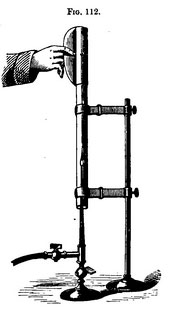
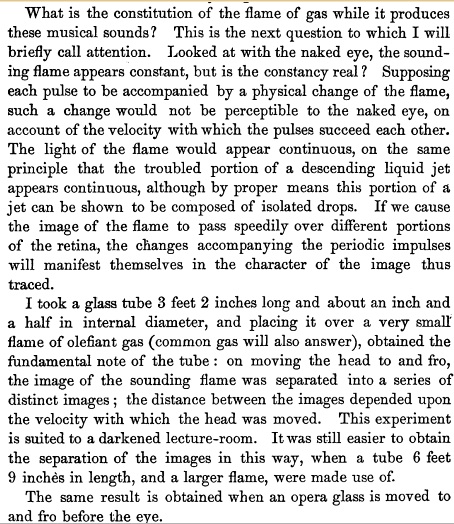
A video documenting the recreation of a 19th century lab experiment, the “Philosopher’s Organ” or “Singing Flames”, for a performance at Mercat de les Flors, Festival de Musica del Segle XX, with live video by 77Hrz (Benton C Bainbridge and Nancy Meli Walker). The apparatus was on loan from the Laboratori de física experimental Mentora Alsina. Video by Adolf Alcañiz


Singing Flames, University of Barcelona

Singing Flames, University of Barcelona

singing-flame

Tyndall 1

6.4.89 Tiananmen

A site-specific installation with artist Francesca Llopis in the aftermath of the events in Tiananmen Square, inspired by a bus cemetery in Hospitalet, periphery of Barcelona.  The sound was a collage of four independently repeating simultaneously played tapes, using four car stereo players and outdoor public address speakers.  The musical material included Chinese classical music, Wu Zu “An Ambush on All Sides”, Chinatown pop, Chinese folk songs, original material based on ancient score notations (Barbara Held, flute), The Internationale.